


The Asthma Society of Ireland has welcomed important commitments in Budget 2027 to strengthen community care and expand diagnostic services – but says Government has an opportunity to improve asthma control for children and reduce avoidable pressure on the health service.
Policy & advocacy , Pre-Budget Submissions
October 7, 2026
The Society’s Pre-Budget Submission 2027, Backing Every Breath, Building Better Care, called for a package of measures to improve asthma diagnosis, treatment and specialist care, with making Maintenance and Reliever Therapy (MART) inhalers free for children aged 12–17 at its centre.

The costed proposal, estimated at €12.1 million annually, would remove a financial barrier to a treatment recommended for most people with asthma aged 12 and older.
MART combines maintenance and reliever medication in a single inhaler and can simplify asthma management while reducing the risk of severe asthma attacks.
Growing momentum for free MART
Although Budget 2027 does not include funding to make MART free for children aged 12–17, the campaign has generated significant political and clinical momentum.
In recent weeks, the issue has been raised in both the Dáil and Seanad, alongside engagement with policymakers from across the political spectrum.
The Asthma Society would also like to thank everyone who supported the campaign by contacting their TDs and raising the issue with their local representatives. Every email, message and conversation helped demonstrate the strength of support for affordable access to MART and helped keep children’s asthma on the political agenda.
The Society highlighted the experiences of families managing the cost and complexity of asthma treatment, including through its Asthma Awareness Week survey, which gathered responses from 549 parents and guardians across Ireland.
Almost one in ten parents surveyed said their child had gone without prescribed asthma medication because of financial pressures.
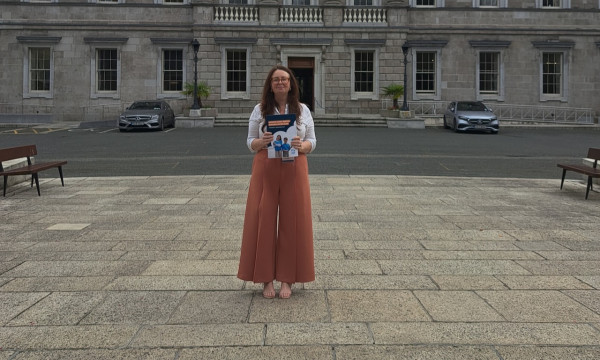
“Our costed proposal to make Maintenance and Reliever Therapy inhalers free for children aged 12 to 17 offered a practical way to support those outcomes by removing a financial barrier to clinically recommended treatment. said Eilís Ní Chaithnía, CEO of the Asthma Society of Ireland.
“We are pleased to see real momentum building behind the call for free MART inhalers for children, with engagement from across the political spectrum and strong support from clinicians and people with asthma. We are grateful to everyone who has helped keep this issue on the agenda.
That support now needs to translate into funded access. We will continue to push for MART inhalers to be made accessible to everyone with asthma who can benefit from it, regardless of their ability to pay.”
Drugs Payment Scheme threshold remains unchanged
The Society has also expressed disappointment that the €80 monthly Drugs Payment Scheme threshold remains unchanged, having stayed at this level since 2022.
The Asthma Society says the findings from its 2026 parents’ survey demonstrate the real impact that medication costs can have on families, with almost one in ten parents reporting that their child had gone without prescribed asthma medication because of financial pressures.
Affordable access to effective asthma treatment remains an immediate priority for the Society.
Welcome investment in community care and diagnostics
The Asthma Society welcomes additional investment in health services announced in Budget 2027, particularly the focus on earlier access to care and strengthening services in the community.
The Society had called for greater investment in respiratory diagnostics, including through Community Health Hubs.
It therefore welcomes plans to expand evening and weekend diagnostic activity and strengthen community services. The Society will now seek clarity on the funding, staffing, and capacity that will be dedicated to objective asthma testing, including through Community Health Hubs.
Improving access to objective testing remains particularly important for asthma.
HSE data published in 2023 showed that only 9.2% of people with asthma enrolled in the Chronic Disease Management Programme had undergone spirometry. Meanwhile, just 10% of parents who took part in the Asthma Society’s 2026 survey said their child’s asthma had been diagnosed using an objective test.
Ireland still needs a National Respiratory Strategy
The Asthma Society welcomes the progress made in Budget 2027, but believes there was an opportunity to give greater focus to respiratory health.
Respiratory disease accounts for almost one in five deaths in Ireland. In 2022, Ireland’s death rate from respiratory diseases was 24.6% higher than the average across comparable European countries – the largest gap among the major causes of death.
Despite this burden, Ireland does not currently have a National Respiratory Strategy.
The Asthma Society believes an integrated national policy on lung health, backed by dedicated funding and a clear implementation plan, is critical to improving prevention, diagnosis and treatment, reducing avoidable deaths and addressing pressure on the health service.
Progress on vaccination
The Society also welcomed progress on some of the vaccination priorities included in its Pre-Budget Submission.
This includes pre-Budget announcements confirming reimbursement of the enhanced flu vaccine for people aged 65 and over and RSV immunisation for infants.
However, gaps remain. The Society continues to advocate for RSV protection for older people and improved access to pneumococcal vaccination for people with clinical risk factors, including asthma.
Healthier homes and cleaner air
Beyond direct healthcare measures, the Asthma Society welcomed enhanced renewable energy and retrofit supports, including changes to the Warmer Homes Scheme.
Improving the quality and energy efficiency of homes can benefit respiratory health, particularly for households vulnerable to poor housing conditions and indoor air pollution.
The Society also welcomed the increase in the cost of tobacco, nicotine, and vaping products announced in Budget 2027, while emphasising that fiscal measures should be accompanied by sufficient investment in services to support people who want to quit.
Smoking prevalence in Ireland has remained at 17% since 2019.
The Society remains concerned about the planned increase in public transport fares from January 2027. Its Pre-Budget Submission called for greater investment in public and active transport, reflecting the links between transport choices, air quality, and respiratory health.
Our work doesn’t stop here
Around 450,000 people in Ireland have asthma, and the condition’s societal cost was estimated at €1.2 billion in 2021 through healthcare expenditure, lost productivity, and reduced quality of life.
Budget 2027 contains important steps forward – particularly around community care, diagnostics and vaccination – and the Asthma Society will continue to work with Government and policymakers across the political spectrum to build on this progress.
The campaign for free MART has demonstrated what can happen when evidence, patient experience, and sustained advocacy come together.
We will continue to make the case for affordable access to effective asthma treatment, better diagnosis, stronger respiratory services, and a national approach to lung health.